AI, data and governance consulting · Latin America
Your organisation is already using AI. Do you know where, with what risks, and which uses are worth scaling?
AGORA identifies the AI already in use, assesses data and governance, and turns it into priorities the board can stand behind.
Twelve questions, human review and a written response by email within 24–48 business hours. No cost and no commitment.
First Data. Then AI. Always the Business.
The challenge
AI is scaling faster than governance.
Adoption advances through a team's initiative, a tool that already came bundled, or a vendor. Governance advances by decision. The distance between the two curves is the risk nobody measured.
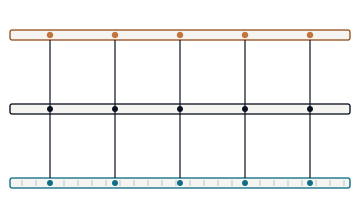
How a business challenge becomes a governed AI capability. Five moments, always in the same order. The business is at the start and at the end.
Business
It all starts with a decision.
A business decision you want to improve, and a criterion for knowing whether it worked. Without it, no data and no model has anything to be measured against.
Data
The data is there, but scattered.
Sources without an owner, unknown quality and uses nobody recorded. There is information; there is not yet a foundation.
Uses nobody inventoried. AI arrives with a tool, a vendor or a team's initiative. Nobody can say precisely where it is, what data it touches or who answers for it.
AI
Put in order, it becomes intelligence.
With an inventory, owners and known quality, AI works on reliable information and use cases can be prioritised.
Priorities that cannot be told apart. Without a map of uses and risks, it is hard to separate what creates material exposure from what is truly worth scaling.
Governance
Control is what makes scale possible.
Roles, rules, controls and evidence, in layers: every use has someone accountable for it and a way to show it is under control.
Rules that do not reach operations. Criteria exist per area or in a document. When something goes wrong it is unclear who decides and what evidence remains.
Impact
And the business decides better.
Decisions with value criteria, risks in sight and a roadmap leadership can stand behind. AI stops being a pilot and becomes a capability.
Which of these situations best describes your organisation?
Pick one and we will show you where the work usually starts. It is guidance to find your bearings, not an assessment or a maturity measurement.
The recommendation depends only on the option chosen. The actual scope is defined with human review, in the assessment or in a conversation.
How to engage
Three steps, and at each one you decide whether to continue.
Every proposal has its scope and price fixed before work starts. We do not bill by the hour.
Free assessment
A written response by email, with observations and up to three priorities. No cost and no commitment.
4-week assessment
The inventory of AI uses, the risks and the data and governance gaps, and a 90-day prioritised roadmap presented to leadership. The roadmap is yours even if you do not continue with us.
Solutions, following the roadmap
AI readiness and strategy, Data and operations, AI governance and risk, or AI operating model. You engage only what the assessment prioritised.
Why AGORA
Judgement before tooling.
Deciding what to do with AI is a business decision. Technology is chosen after understanding the problem, not before.
Independence
AGORA does not sell the tool that would then have to be governed.
We do not resell platforms or licences. That removes the conflict of recommending what suits us to sell.
Evidence
A control exists when it can be shown to operate.
We prefer a short verifiable scope to a broad programme without backing.
Transfer
The knowledge has to stay in the organisation.
We direct implementation alongside internal teams and existing vendors.

The experience we show is the prior track record of the firm's members, at previous employers and programmes. It is not AGORA Advisory's client portfolio and does not imply a current commercial relationship with those organisations.
Backing
A method of our own
325 controls, each with an owner and evidence, in a framework built on ISO/IEC 42001, the EU AI Act and NIST AI RMF. They are reference frameworks: that does not imply certification of the firm or automatic compliance.
See the frameworkPublished in Infobae
«Lo que la inteligencia artificial no puede automatizar» · · In Spanish
Read the column (opens in a new tab)
Contexts we know
- Public sector
- Health
- Financial services
- Justice and the legal system
- Education and training
- Employment and human resources
- Industry and manufacturing
- Transport and infrastructure
- Energy and utilities
- Water and sanitation
- Commerce and retail
- Media and communications
- Security and border control
Get started
Want to know which stage your organisation is at?
Twelve questions, human review and a written response by email within 24–48 business hours. No automated score and no commercial commitment.